
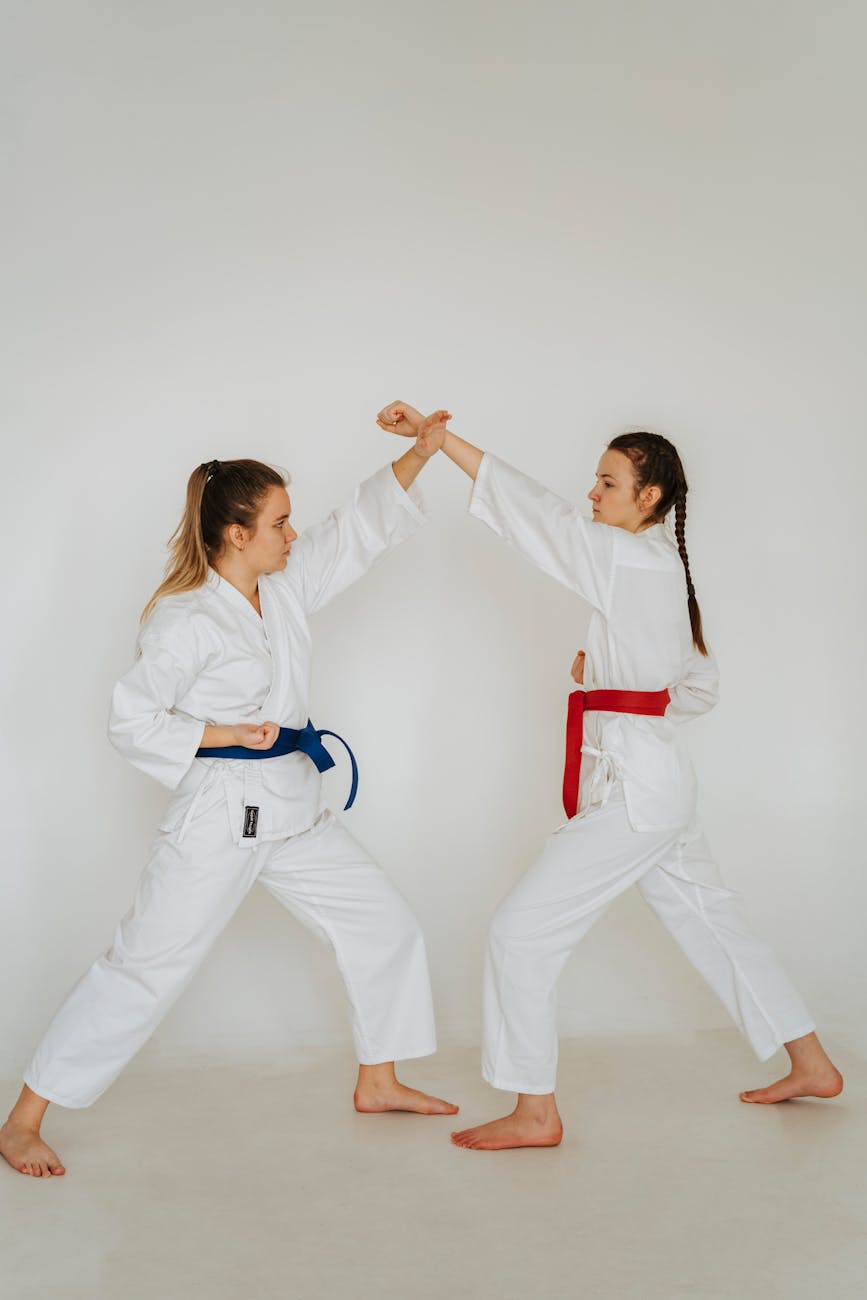
One of the more interesting things about Cobra Kai is that it was never really about karate.
It is about philosophy. More specifically, it is about what happens when people become so committed to a way of thinking that they stop questioning whether it still serves them.
On one side, you have the teachings of Mr. Miyagi, carried forward by Daniel LaRusso and, in a more refined and disciplined form, by Chozen. Balance, patience, and defense over aggression. The belief that restraint is strength and that character matters more than victory.
On the other side, you have Cobra Kai, shaped by John Kreese and Terry Silver. Strike first. Strike hard.Show no mercy. Control the outcome before it controls you. Strength, in this world, is measured by dominance.
Then somewhere in the middle stands Johnny Lawrence, building Eagle Fang. Not quite refined, not entirely disciplined, but moving toward something more honest. A recognition that neither extreme fully works on its own.
What makes the series compelling is not which philosophy is right. It is that each one works, until it doesn’t.
Miyagi-Do, when taken too far, becomes passivity. A reluctance to act. A belief that patience alone will resolve situations that actually require decisive movement.
Cobra Kai, when left unchecked, becomes aggression without reflection. It produces results quickly, but often at a cost that is only understood later.
Eagle Fang attempts to bridge that gap, but struggles when it leans too heavily in one direction.
The students are the ones who begin to see this most clearly. Sam LaRusso, Robby, and Miguel each reach a point where they stop asking which style is correct and begin asking what actually works. They learn to integrate. To take what is useful and leave what is not.
The adults, however, remain largely fixed.
And that is where this begins to look less like a television show and more like real life.
With age and experience often comes certainty. Not always wisdom, but certainty. A belief that the way we learned, the way we struggled, the way we succeeded is not just a way, but the way.
You see it in business, in parenting circles, and perhaps most clearly, in politics.
People anchor themselves to a philosophy and defend it, even when evidence suggests it is no longer effective. Conversations turn into debates. Debates turn into division. And somewhere along the way, the original goal, to grow, to improve, to build something better, gets lost.
What the younger characters demonstrate, whether they realize it or not, is adaptability. They are less invested in being right and more willing to adjust.
That is not a lack of conviction. It is a willingness to evolve.
There is a lesson in that, particularly for those of us who have lived long enough to have seen multiple cycles of certainty come and go.
No single philosophy holds all the answers. Not in business. Not in life. And especially, not in how we navigate a changing world.
Balance is not found in choosing a side and staying there. It is found in knowing when to stand firm and when to shift.
Miyagi-Do teaches restraint. Cobra Kai teaches action. Eagle Fang teaches that there is space in between.
The question is not which one you align with. It is whether you are willing to recognize when your current approach is no longer working, and whether you have the humility to adjust.
Because growth rarely comes from doubling down.
More often, it comes from stepping back, reassessing, and choosing differently.
Leave a Reply