
Every Fourth of July, somewhere between backyard cookouts, fireworks, red-white-and-blue desserts, and summer celebrations, someone inevitably makes a joke about Independence Day — the movie where humanity bands together to fight an alien invasion.
And let’s be fair: it was a great movie. Few speeches captured 1990s blockbuster energy quite like the idea of the entire world uniting for survival.
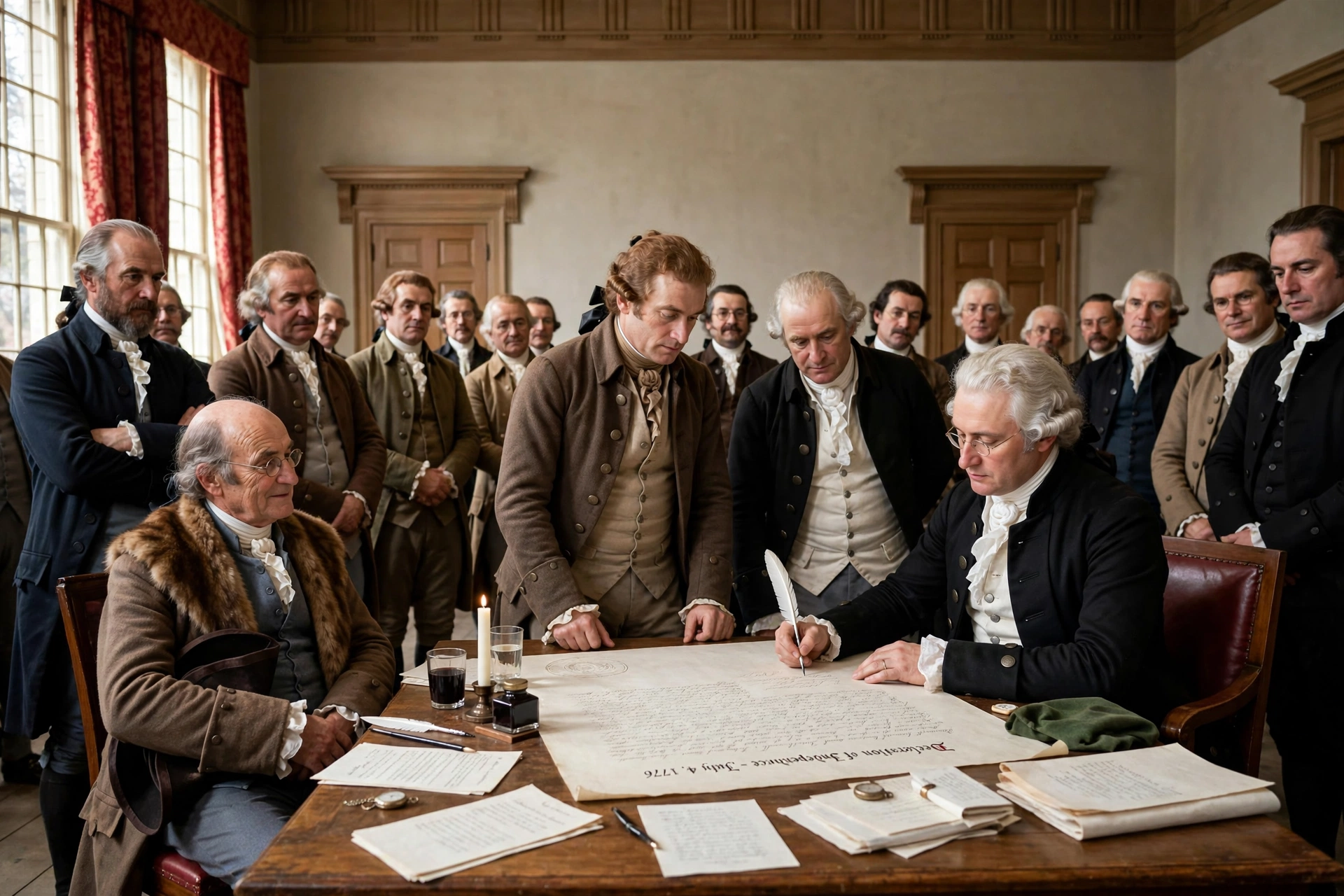
But July 4th isn’t about defeating aliens. It’s about a group of people who reached a point where they believed they had exhausted every reasonable option available to them. It’s about representatives from thirteen colonies putting ink to parchment, knowing the consequences could cost them everything, including their lives.
The Declaration of Independence was not simply an announcement; it was an act of defiance.
For years before 1776, tensions had been building between the American colonies and Great Britain. Many colonists did not begin by demanding separation from the Crown. They petitioned, debated, and attempted to compromise with the King to no avail. They argued that, as British subjects, they deserved representation and rights within the system to which they belonged.
The break did not happen overnight, but when appeals failed and reconciliation seemed impossible, the representatives gathered in Philadelphia and made a decision that changed history. They declared independence from the most powerful empire in the world, and they understood the ramifications.
When those men signed their names, they weren’t signing a symbolic document destined for museum displays and future history textbooks. They were attaching themselves personally to rebellion against the Crown. If the revolution failed, they inevitably would be branded traitors, losing their homes and fortunes, or facing execution as an example of what happens to those who challenge an empire.
They were not signing because victory was guaranteed, but because they believed the possibility of something better was worth the risk. That belief became the foundation of the American experiment — not perfection, but progress.
The Founders were imperfect men living in an imperfect time. They carried the contradictions and failures of their era, including injustices that would take generations of struggle, sacrifice, and courage from others to confront. The promise written into America’s founding documents was greater than the reality of the nation that first emerged.
“We the People” would become a phrase America would spend centuries learning how to fully honor.
But the remarkable thing about the foundation they created was that it contained within itself the ability to grow, debate, challenge, and correct its own course. The Founders did not create a finished masterpiece; they created a framework designed to continue the pursuit of, as written in the Constitution years later, “a more perfect Union.”
Today, conversations about America’s founding are complicated. Some view the colonists primarily as colonizers. Some question whether independence itself was the right path. Some argue history could have unfolded differently had the colonies remained connected to Britain.
And yet, the extraordinary thing is that in America, people have the freedom to say exactly that.
People can criticize the Founders, challenge the government, question elected leaders, organize movements, and publicly debate the direction of the country without committing treason. That freedom, the ability to question power itself, is part of the inheritance that came from those revolutionary ideas.
Throughout history and still today, people leave behind everything familiar seeking places where those freedoms exist. Not because America is flawless, but because the opportunity to speak freely, worship according to personal conviction, build something from nothing, disagree openly, and pursue a different future remains powerful.
The story of Independence Day is not a story about perfect heroes creating a perfect nation. It is a story about imperfect humans choosing courage over comfort and risking everything because they believed future generations deserved the chance to build something better.
The Fourth of July is more than fireworks lighting up the sky. It is a reminder that freedom has always carried responsibility, progress requires participation, and preserving a nation built on ideas requires understanding the history that shaped it.
The work of creating a more perfect union was never finished in 1776.
It was only the beginning.
Leave a Reply