
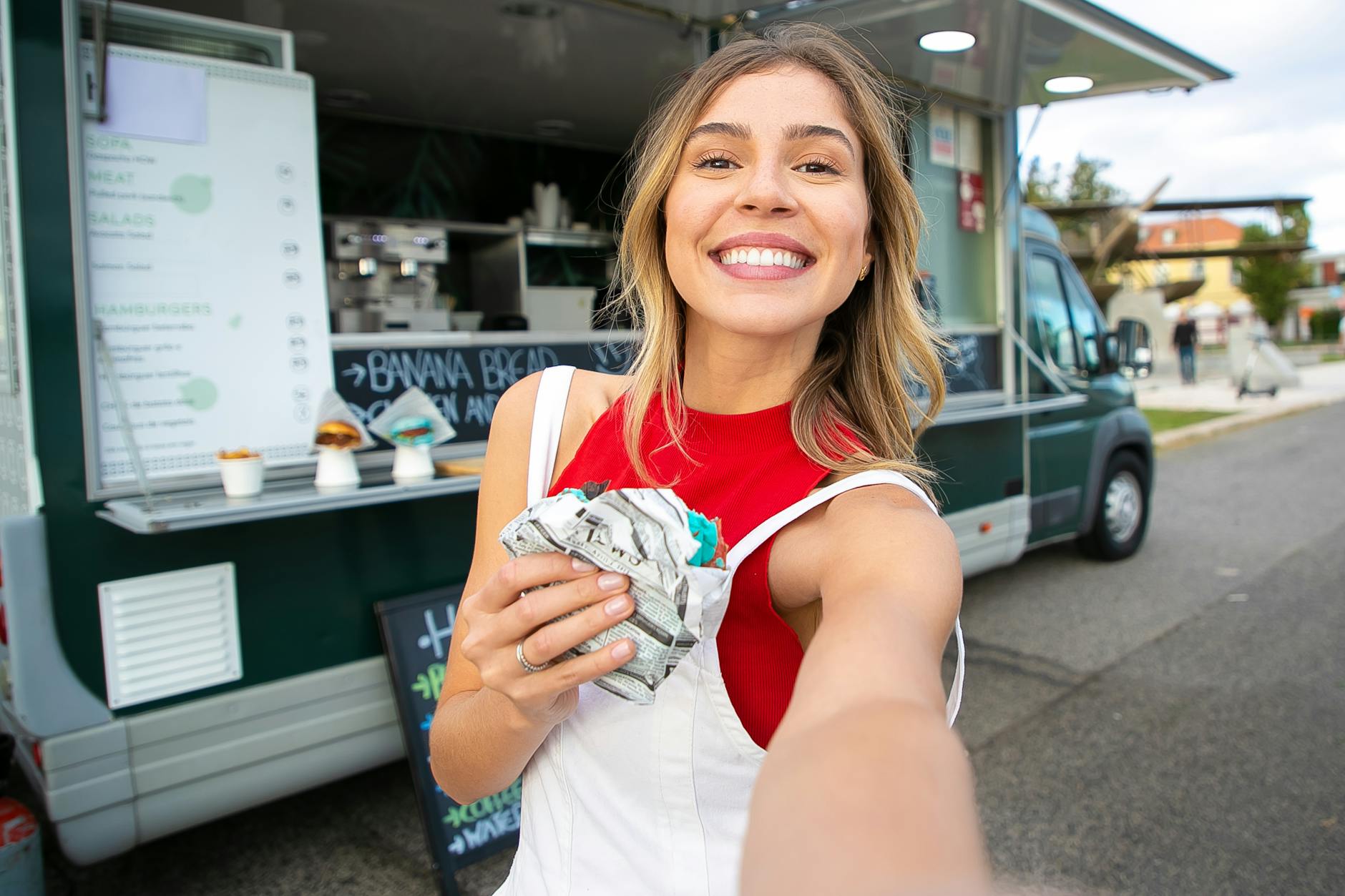
The other night my daughter and I started watching season three of The Great Food Truck Race on Discovery+.
It has turned into one of those quiet, low-key traditions that sneak up on you. The kind where you sit down thinking you will watch one episode and end up three episodes deep because the storytelling pulls you in.
What struck me this time around is how differently I am watching it now compared to when it originally aired.
Back then I was just enjoying the competition. The food. The chaos of trying to run a mobile kitchen in unfamiliar cities.
Now I am watching it through the lens of someone who has spent years running a small business: reselling clothing, accessories, and all kinds of miscellaneous treasures that find their way into my inventory. When you have lived inside the reality of small business long enough, shows like this start to look less like entertainment and more like a case study in branding, customer psychology, and sheer determination.
Season three was particularly interesting because the teams were not established food truck brands yet. They were ordinary people trying to achieve the extraordinary. And the final four teams made that journey fascinating to watch.
Momma’s Grizzly Grub brought Gen X moms from Alaska who wanted to shake up the food scene in their community. Pop-A-Waffle exuberated personality and fun in a way that made them instantly memorable. Nonna’s Kitchenette carried the loud, loving confidence of Italian-American cooking straight out of Jersey kitchens. And Seoul Sausage, the eventual winners, were young Korean-American entrepreneurs trying to prove to their parents that cooking could be a real career path.
Every team had a completely different vibe. Yet all of them were doing something that many businesses struggle with today. They were telling a story without trying too hard.
When the Brand Is the Person
Watching this with my daughter has been interesting because she reacts to different things than I do. She notices the food first, the menus, and the dishes that look amazing or unusual.
I notice the way people talk to customers. The way they set up their truck window. Some teams naturally draw people in, while others struggle to get attention, even when their food is good.
Running a resale business taught me something that does not always show up in business books. The product matters, of course, but the experience around the product often matters just as much.
People want to feel something when they buy from you. That feeling might be nostalgia, trust, or excitement at discovering something unique. But it is rarely just about the item itself.
Watching these teams sell food out of a truck window reminds me of standing at a flea market table or packing an order for someone who found a vintage piece they had been searching for. There is a human exchange happening in those moments.
And that exchange is where branding truly lives.
The Trap of Comparison
One thing that becomes obvious when you watch the show is that every team tries to figure out what the others are doing.
Who is selling the most?
Who has the longest line?
Who found the best location?
You can almost see the wheels turning in their heads.
And that instinct is completely understandable. Every entrepreneur feels it at some point.
Scroll social media long enough, and the same questions start creeping in.
Why is that brand growing faster?
Why does their product seem to sell instantly?
What am I missing?
This is exactly where the philosophy of Oubaitori becomes incredibly grounding.
The concept comes from four spring blossoms: cherry, plum, peach, and apricot. Each one blooms at its own time. None of them is trying to outdo the others.
They simply bloom according to their nature.
It sounds simple, but in a comparison-driven digital world, it is surprisingly difficult to practice.
What the Best Brands Understand
When I look at those food truck teams now, the ones that stand out are not necessarily the ones with the flashiest menu offerings.
They are the ones who understand who they are.
Nonna’s Kitchenette did not try to tone down their Jersey personalities. Pop-A-Waffle leaned into fun and energy. Seoul Sausage brought their Korean-American identity into every dish they served.
That clarity makes a brand memorable.
And it is the same principle that applies to small businesses today, whether you are selling food, candles, vintage clothing, handmade jewelry, or curated home goods.
Customers are not just buying a product.
They are buying a story they want to be part of.
What This Means for Your Brand
March is the beginning of the season when things start to bloom again. Before the flowers show up, though, something quieter happens underground.
Seeds are planted.
For business owners, storytelling works the same way.
Your story does not have to be dramatic or extraordinary. It simply has to be real. Why you started your business, what values you care about, and the experiences that shaped the way you do business.
Those details are what make a brand feel human.
Over time, they create the kind of familiarity that algorithms cannot manufacture. People begin to recognize your voice, your values, and the way you interact with your community.
That recognition builds trust.
And trust builds loyalty.
A Small Reflection From the Couch
Watching this show with my daughter has also reminded me of something else.
There was a time when I was just watching people build businesses on television.
Now I know what that kind of effort actually looks like.
The long days. The uncertainty. The moments where you wonder if anyone will even show up.
Small business has a way of humbling you while also teaching you what you are capable of.
That is why I love the message behind Oubaitori so much. It reminds us that growth does not always happen on a predictable timeline. Some brands bloom quickly. Others take years to find their rhythm.
Both paths are valid.
The Tuesday Tip
If you are building something right now, whether it is a product line, a creative project, or a full-fledged small business, focus less on competing and more on clarifying your story.
Ask yourself what makes your brand unmistakably yours.
Not louder.
Not trendier.
Just authentically yours.
Because when your story is clear, your audience can find you more easily.
And when the right people find you, that is when your brand truly begins to bloom.
Just like those four spring blossoms.
Cherry. Plum. Peach. Apricot.
Each one is beautiful in its own season.
Leave a Reply